
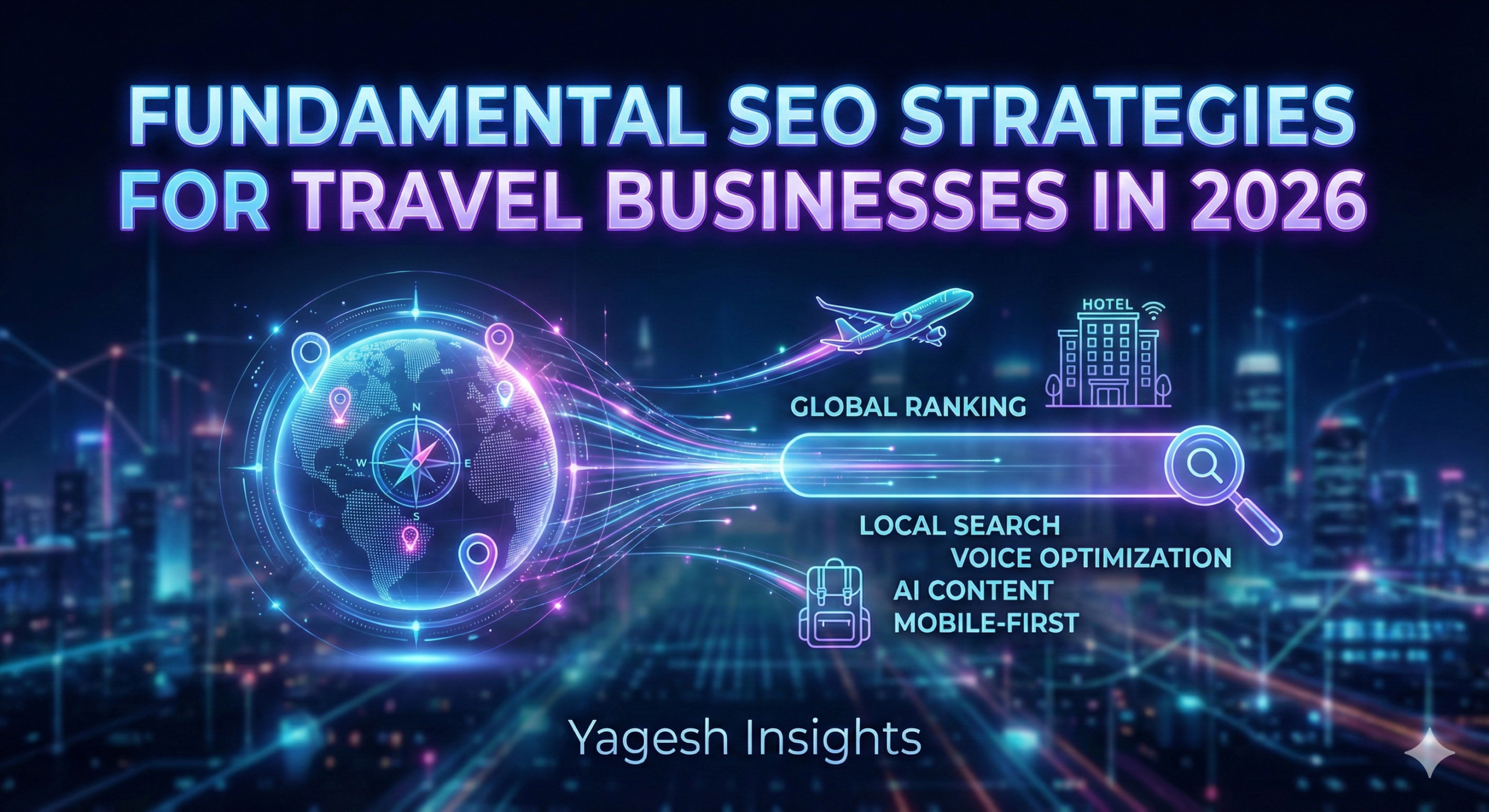
Hello, fellow explorers of the digital landscape! Yagesh Shanmuganathan here, ready to guide you through the ever-evolving world of search engine optimization. In the vibrant and highly competitive travel industry, simply having a great product or service isn’t enough. To truly thrive, you need to be seen, discovered, and booked. That’s where a robust travel industry SEO strategy becomes your most potent marketing tool. As we navigate 2026, the rules of engagement are shifting, driven by AI, evolving user behavior, and Google’s relentless pursuit of the best user experience. This deep dive will equip you with the essential SEO strategies to not just survive, but to truly skyrocket your bookings.
The travel sector is inherently visual, experiential, and aspirational. Your SEO strategy must reflect this, transcending mere keyword stuffing to deliver genuine value and authority. From luxury tour operators to boutique hotels, adventure travel companies to local guides, the principles remain the same: optimize for search engines while prioritizing the human experience.
The Core Pillars of a Modern Travel Industry SEO Strategy
Building an effective SEO strategy for your travel business is akin to meticulously planning an unforgettable journey. It requires a clear destination, a detailed itinerary, and constant adaptation to unexpected turns. Let’s explore the foundational pillars that will elevate your visibility and drive conversions.
1. Hyper-Focused Keyword Research & User Intent Mapping
The days of generic keywords are long gone. In 2026, understanding user intent is paramount for any successful travel industry SEO strategy. Travelers don’t just search for “Paris hotels”; they might search for “boutique hotels near Eiffel Tower with balcony,” “family-friendly resorts Maldives all-inclusive,” or “adventure tours Patagonia budget.”
- Long-Tail Keywords: These are your goldmine. They reveal specific needs and are less competitive, leading to higher conversion rates. Tools like Ahrefs, Semrush, and Google Keyword Planner, combined with Google’s “People Also Ask” and “Related Searches,” can uncover these gems.
- Voice Search Optimization: With the rise of virtual assistants, conversational queries are prevalent. Think how people speak: “What are the best things to do in Rome for a weekend?” rather than “Rome activities.”
- Local SEO Keywords: Crucial for physical locations (hotels, tour offices). Include city, neighborhood, and specific landmark names.
- Semantic Keywords: Don’t just focus on exact matches. Understand the broader topics and related terms that a user interested in “beach vacation Mexico” might also search for (e.g., “all-inclusive resorts Cancun,” “Riviera Maya activities,” “best time to visit Tulum”).
- Intent Mapping: Categorize keywords by intent:
- Informational: Users seeking knowledge (e.g., “best time to visit Peru”). Your content should be guides, blogs, FAQs.
- Navigational: Users looking for a specific website (e.g., “Delta Airlines”). Ensure your brand name ranks.
- Commercial Investigation: Users researching options (e.g., “best travel insurance for Europe”). Feature comparisons, reviews.
- Transactional: Users ready to book (e.g., “book flights to Tokyo,” “Maldives resort deals”). Optimize booking pages and product listings.
2. On-Page SEO: Crafting Engaging Experiences
On-page SEO is where your content truly shines and communicates its value to both users and search engines. A strong travel industry SEO strategy focuses on creating an immersive digital experience.
- Compelling Content: This is non-negotiable. Develop in-depth destination guides, personalized itineraries, inspiring travel stories, authentic customer testimonials, and practical travel tips. Use high-quality imagery and video extensively. Content should be informative, engaging, and unique.
- Optimized Meta Titles & Descriptions: These are your digital storefronts in search results. Include your primary keyword, a compelling call-to-action, and unique selling propositions. Keep character limits in mind.
- Header Tags (H1, H2, H3): Structure your content logically. Use keywords in your headers to signal topic relevance to search engines.
- Image & Video Optimization: Travel is visual. Optimize image file sizes for fast loading, use descriptive alt text with keywords, and ensure videos are hosted efficiently (e.g., YouTube) and embedded correctly.
- Internal Linking Structure: Create a logical internal linking strategy that guides users and search engine crawlers through your site, connecting related content and distributing link equity. Link from high-authority pages to important booking pages.
- Mobile-First Design & User Experience (UX): Google primarily uses the mobile version of your site for indexing and ranking. Ensure your website is fully responsive, loads quickly on mobile devices, and offers an intuitive booking experience. A clunky mobile site will kill conversions.
3. Technical SEO: The Unseen Engine of Success
Behind every smooth user experience is robust technical SEO. This aspect of your travel industry SEO strategy ensures search engines can efficiently crawl, index, and understand your website.
- Core Web Vitals & Page Speed: Google prioritizes fast-loading, stable, and interactive websites. Optimize images, leverage browser caching, minimize CSS/JavaScript, and use a reliable hosting provider. Slow sites lead to high bounce rates and lost bookings.
- Schema Markup (Structured Data): This is critical for travel businesses. Implement schema for:
- Local Business: For hotels, tour operators, travel agencies.
- Review/AggregateRating: Display star ratings directly in SERPs.
- Product/Service: For tours, packages, flights.
- FAQPage: To appear in rich results and answer user questions.
- Event: For specific tours or travel dates.
Schema helps Google understand your content better and can lead to rich snippets, significantly increasing click-through rates.
- Crawlability & Indexability: Ensure search engines can access and index all important pages. Use an optimized robots.txt file, submit XML sitemaps to Google Search Console, and regularly check for crawl errors.
- HTTPS Security: Essential for user trust and a ranking factor. Ensure your entire site uses HTTPS.
- Canonicalization: Prevent duplicate content issues by using canonical tags where necessary, especially for variations of product pages or filters.
4. Off-Page SEO & Authority Building: Earning Trust
Off-page SEO involves activities outside your website that build its authority and reputation. For a comprehensive travel industry SEO strategy, this means earning valuable backlinks and managing your online presence.
- High-Quality Backlinks: Secure links from reputable travel blogs, industry news sites, local tourism boards, and relevant publications. Focus on quality over quantity. Guest posting, digital PR campaigns, and collaborating with travel influencers can be highly effective.
- Online Reputation Management: Monitor and respond to reviews on platforms like Google My Business, TripAdvisor, Yelp, and other travel-specific review sites. Positive reviews build trust and can improve local search rankings. Address negative feedback professionally.
- Social Media Engagement: While social signals aren’t direct ranking factors, active social media profiles can drive traffic, increase brand visibility, and indirectly support your SEO efforts by amplifying content.
- Brand Mentions: Even unlinked mentions of your brand across the web contribute to your authority in Google’s eyes.
5. Local SEO: Connecting with Nearby Travelers
For any travel business with a physical location or serving a specific geographic area, local SEO is non-negotiable. This is especially true for hotels, local tour operators, car rentals, and travel agencies.
- Google My Business (GMB) Optimization: This is your most powerful local SEO tool. Claim and fully optimize your GMB profile with accurate business information (Name, Address, Phone – NAP), stunning photos, business hours, services, and regular posts. Encourage and respond to reviews.
- NAP Consistency: Ensure your business name, address, and phone number are consistent across all online directories, social media profiles, and your website. Inconsistencies confuse search engines.
- Local Citations: List your business in relevant online directories (e.g., Yellow Pages, industry-specific directories, local tourism sites).
- Geo-Targeted Content: Create content specifically for local searches, such as “best hiking trails near [city],” “things to do in [neighborhood],” or “weekend getaways from [major city].”
6. The AI Factor & Personalization in Travel SEO
Artificial Intelligence is no longer a future concept; it’s actively shaping search. Your travel industry SEO strategy must adapt to leverage AI and deliver highly personalized experiences.
- Generative AI & Search: Anticipate how Google’s Search Generative Experience (SGE) will influence results. Focus on providing comprehensive, authoritative, and truly helpful content that AI models can use to synthesize answers. Being the source of truth is key.
- Personalized Search Results: Search results are increasingly personalized based on user history, location, and preferences. Focus on creating diverse content that caters to various traveler personas and their specific needs.
- Leveraging AI for SEO: Use AI tools for faster keyword research, content ideation, competitive analysis, and even drafting initial content outlines. However, always ensure human oversight for accuracy, creativity, and authenticity.
- Predictive Analytics: Use AI to analyze booking trends, seasonal demands, and traveler behavior to inform your content and promotional strategies.
7. Measuring Success & Continuous Adaptation
An effective travel industry SEO strategy is never static. It requires constant monitoring, analysis, and adaptation.
- Key Performance Indicators (KPIs): Track organic traffic, keyword rankings, bounce rate, time on page, conversion rates (bookings, inquiries), and customer lifetime value.
- Google Analytics 4 (GA4): Leverage GA4 to understand user behavior, conversion paths, and the effectiveness of your SEO efforts.
- Google Search Console (GSC): Essential for identifying technical issues, monitoring crawl stats, seeing which queries drive traffic, and understanding your site’s performance in search.
- Competitor Analysis: Regularly analyze what your competitors are doing well in SEO and identify gaps or opportunities.
- Stay Updated: The SEO landscape changes rapidly. Follow industry news, Google updates, and best practices to ensure your strategy remains cutting-edge.
Your Journey to Digital Dominance Begins Now
The travel industry is poised for continuous growth, and with it, the competition for online visibility intensifies. Implementing a forward-thinking travel industry SEO strategy in 2026 is not just an option; it’s a necessity for sustained success. By focusing on deep audience understanding, crafting compelling on-page experiences, building a strong technical foundation, earning authority, mastering local search, and embracing the advancements in AI, your travel business can climb the ranks of search results and unlock unprecedented booking potential.
Remember, SEO is a marathon, not a sprint. It requires patience, consistent effort, and a commitment to providing the best possible experience for your users. Start implementing these strategies today, monitor your progress, and adapt as needed. The digital horizon is vast, and with the right SEO compass, your travel business is ready to embark on a journey of remarkable growth. Happy optimizing!