For the last year, everyone in the marketing world has been asking the exact same question about when OpenAI is going to turn on the ad machine.
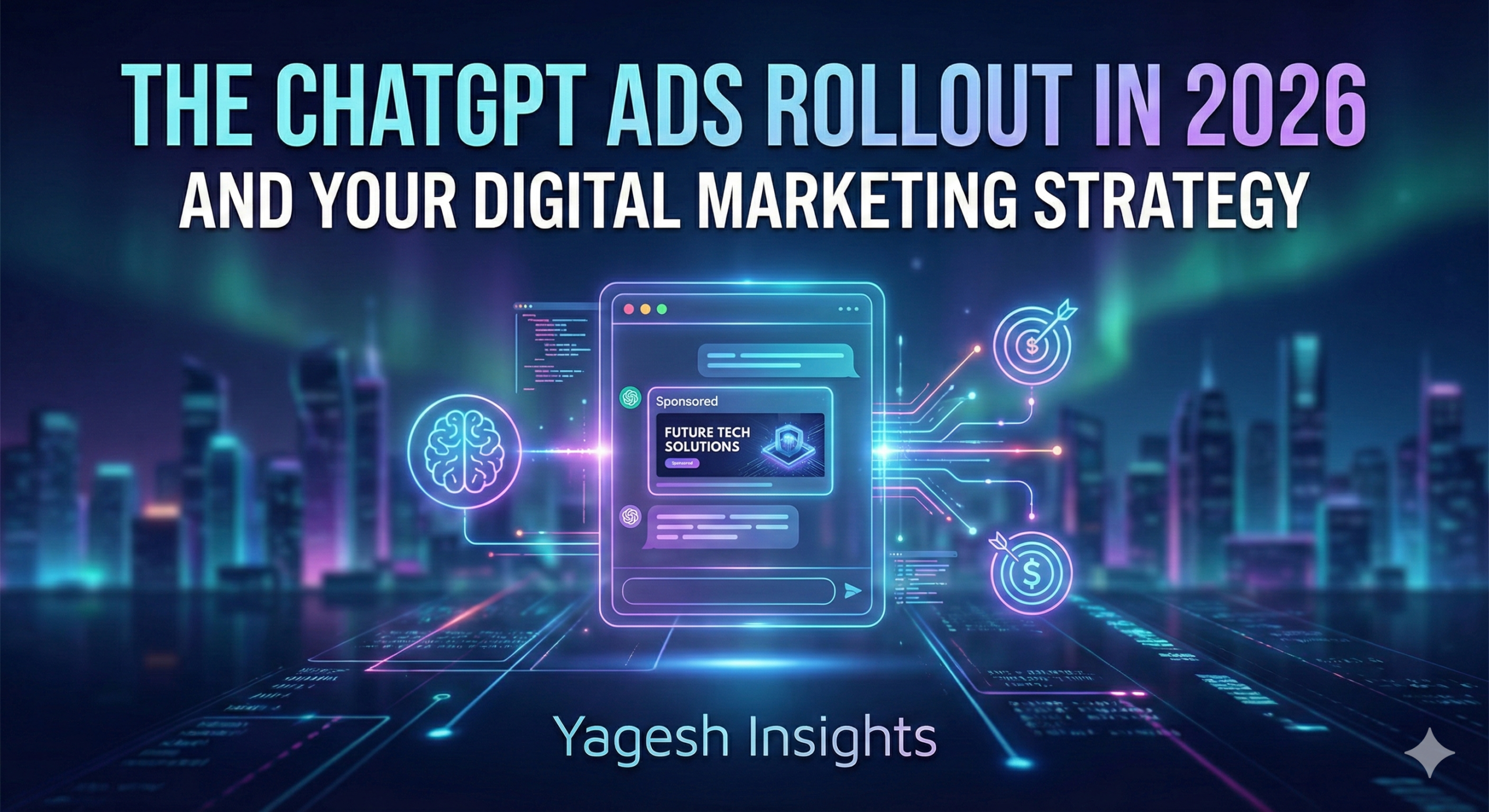
As of February 9, 2026, we have our answer. OpenAI has officially started live testing sponsored ad placements inside ChatGPT for users in the United States.
In my 7+ years managing paid media and SEO budgets for multinational agencies, I have navigated plenty of algorithm updates and platform changes. But I can tell you right now that this is not just another Google Ads clone. This is a fundamental shift in how we capture user intent.
Here is everything you need to know about the rollout, the massive budgets involved, and how you need to adjust your strategy to survive the shift.
What Actually Just Happened
OpenAI is currently rolling out these test ads exclusively to their Free and $8/month “Go” tier users in the US. If you are paying for their Plus, Pro, Business, Enterprise, or Education tiers, your experience remains completely ad-free.
But here is the catch. They are not opening the advertising floodgates to everyone just yet. Right now, this is highly exclusive, enterprise-level inventory. Reports show that OpenAI is asking for a massive $200,000 minimum commitment from brands, charging roughly $60 per 1,000 impressions (CPM).
To put that in perspective, OpenAI is pricing its ad space alongside premium TV spots instead of standard web banners. Early adopters who are already testing these waters include retail giants like Target, Williams-Sonoma, Adobe, and Expedia.
How Context Over Keywords Works
In traditional Google Search, the dynamic is purely transactional. A user types a keyword, gets a list of links, and clicks an ad at the top.
ChatGPT ads operate on an entirely different level. Instead of bidding on isolated keywords, advertisers are targeting the full context of a conversation. If a user is having an exploratory back-and-forth chat about planning a family vacation, a clearly labeled “Sponsored” ad for a travel booking site will appear below the AI’s organic response.
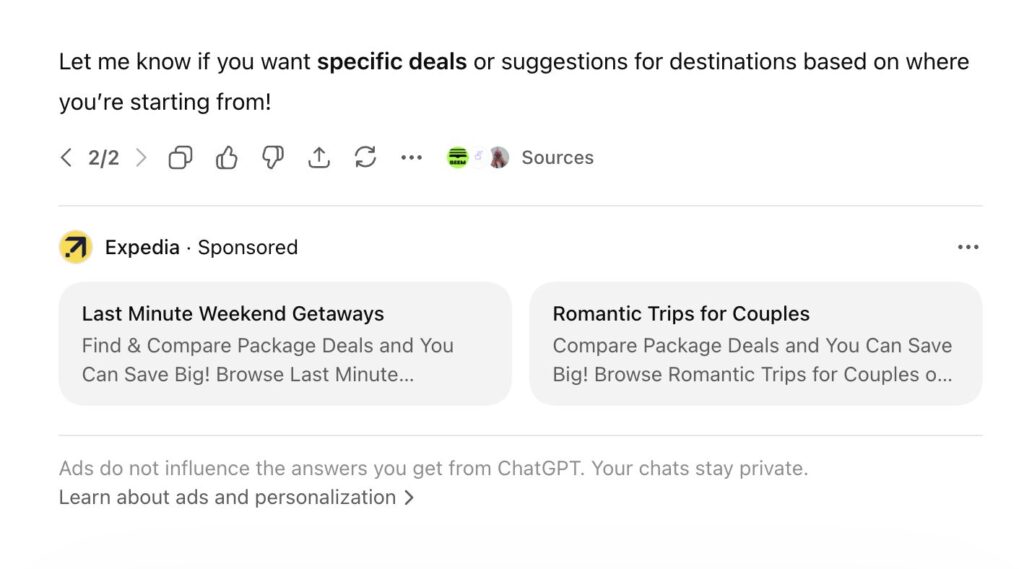
OpenAI has been very strict about maintaining a firewall between the ads and the data. The ads do not influence the AI’s actual answer, and advertisers are not given access to the user’s private chat transcripts. The model gives you the best organic advice it can, and the ad sits cleanly underneath it as a separate, contextually relevant suggestion.
The Trust War and The Competition
When a consumer uses a chatbot, they are usually asking for personalised help instead of just looking for a store directory. If the ads feel intrusive, users will jump ship.
Competitors are already using OpenAI’s monetisation as a weapon. Anthropic, the company behind the Claude chatbot, recently ran a series of Super Bowl commercials mocking the idea of AI chatbots pushing sponsored products. They are heavily marketing themselves as the trusted, “no ads” alternative, and it is working. Their app downloads spiked dramatically right after the campaign.
This creates a massive hurdle for OpenAI. They have to prove that advertising can exist in a conversational space without ruining the integrity of the answers.
How You Need to Prepare Your Strategy
Right now, you probably do not have $200,000 to drop on a ChatGPT ad test. But this rollout is a massive wake-up call. Eventually, this platform will open up to smaller budgets, and you need to be ready.
If you want to win the answer engine battle, you need to start adjusting your strategy today.
- Pivot to Answer Engine Optimisation (AEO) Traditional SEO is about ranking on a search results page, while AEO ensures your brand is the one the AI actually cites in its organic response.
- Prioritise Density Over Fluff Large Language Models ignore marketing fluff and prioritise dense, factual data. You must update your website with deep-dive FAQs, transparent pricing structures, and clear competitor comparisons.
- Write Conversational Content Because these models detect context rather than just isolated keywords, your content must be written to directly answer full, complex questions.
The Bottom Line
The era of ad-free conversational AI is over. Google is already testing ads in its AI Overview search results, and the way consumers discover products online is changing faster than ever.
Start optimising your site for AI answers today. By the time the ad gates finally open to everyday businesses, your brand needs to already be a trusted, authoritative part of the conversation.